The One Less Challenge

I love the beginning of the school year. There’s a sense of anticipation and a certain excitement of new things to come. By the end of summer, New Year’s resolutions have come and gone and I always feel that this is my second chance to start anew.

So I am proposing a challenge, a fall resolution of sorts. I challenge each parent reader (including myself) to start the new school year off with the “One Less Challenge”. Each week, I challenge you to eliminate one processed food from your kids’ lunchbox. That could be any lunch or snack item that is highly processed and that could contain food colouring, preservatives, excess sodium and highly processed sugars and fats. Just one item per week.

Why am I throwing this out there? It all started when the Kid and I sat down last week and brainstormed about what he’d like to pack for his lunches and snacks this upcoming school year. The conversation over the last week has included what he’s observed in the lunchroom and at recess and he was concerned: “Mom, I don’t understand why kids bring food like pop tarts, chocolate coated granola bars, Kraft Dinner, Froot Loops, even Subway to school! It’s not healthy. How can their brains learn well on processed foods?” Good question.

I know I pontificate about the perils of processed foods often and you don’t want to hear me rant, so here are Lisa’s ten good reasons to eat less processed foods from 100 Days of Real Food (I can add more reasons, but I’ll leave that for another day.).

Trading processed foods up for more healthy alternatives doesn’t have to be difficult nor expensive. Going less-processed doesn’t mean you have to make everything from scratch either…there are a lot of store bought foods that fit the bill. Here are some easy, healthy snack ideas. and some healthy lunch ideas. Not sure of what ingredients to avoid? This will give you some guidance on reading ingredient lists.

Here are some popular processed foods to consider replacing:
-goldfish crackers, chips
-luncheon meats, vegetarian meat substitutes
-packaged granola bars, marshmallow crispy rice squares, soft cookies
-chewy fruit snacks and fruit roll ups
-pudding and jello cups
-juice beverages and cocktails
-frozen entrées and pizzas

Up for the challenge? I don’t expect you to deck out in tie-dye, join a commune and eat lentils all day. I just want you to think about what you’re packing in your kids’ lunchboxes, understand how those foods affect your kids’ health and see if you can include one less processed food by replacing it with something healthier.

Your kids will have much to gain by including one less. I promise.
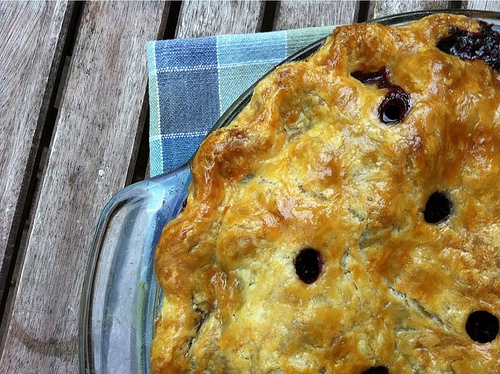
Blueberry Pie

In the Spring my brother and I began working on some renovations to an old house where we spent a good part of our childhood. The old 1930’s house is an architectural gem: inlaid hardwood floors, a beautiful mantle with leaded glass bookshelves on either side of the fireplace, a darling breakfast nook. Being able to spend time working on the old gal was a joy but what really moved me was all the fond childhood memories that came flooding back.

As we sanded, taped and painted together, Andy and I reminisced about the old days and fond memories of the house. He was surprised that I could remember so many details about the house, our neighbourhood and our family’s activities.

Every year about this time, I am transported back to one of my fondest childhood food memories: blueberry pie. My mother is the youngest of her family and that resulted in our fortune of having cousins that are much older than ourselves. One summer my cousins dropped by with two white pails full of freshly picked blueberries that my mom magically transformed into a luscious blueberry pie.

I remember the sweet, intoxicating scent of the pie wafting through the kitchen. And I can still taste the warm berries in their toasty, crumbly crust that forever tastes like summer. That blueberry pie, and I’m sure it was the only one my mom ever baked, tasted like my childhood: the simple pleasure of living in that old house, family and a kitchen full of good things to eat.

A few weeks ago I baked a blueberry pie. To remind me of my sweet childhood and to build some sweet food memories for our child.

Happy 100th Birthday Julia

I watched a lot of TV when I was a kid. A lot. But I’m glad to say that I was raised on a healthy diet of cooking shows. And The French Chef was the first one I lapped up.

I was fascinated by Julia Child. Drinking in her detailed instructions and staring intently on the TV tube, I didn’t miss a single flip, dice or stir that Julia did. At the time, I had no idea about the mystique of French cuisine. Nor did I really understand her tongue in cheek humour. I was just mesmerized by a completely wonderful world of food that was so different from my own.

Over the years I’ve watched and re-watched many of Julia’s cooking programs. I still learn from her uncanny, intuitive teaching style, her affable approach and her joie de vivre. And at the end of each program, I still look forward to hearing her cheerful “Bon appétit!”

Today I, like many food enthusiasts worldwide, am celebrating Julia’s birthday. Happy Birthday Julia. Thank you for all your morsels of wisdom. Bon appétit!

Five reasons why I like Jennifer McLagan

Working at a bookstore dedicated to everything epicurean is a dream come true. One of the reasons why I started working there was because I had amassed an unspeakable number of cookbooks and was cut off from buying anymore. But I had a scheme…by working at the shop, I would have access to thousands of titles and I could read to my heart’s delight.

I had a feeling that working at the shop would be enriching and educational, but I had no idea that I’d have the opportunity to meet well respected authors and chefs and learn so much about the culinary world. Every so often I’m going to share the joy and introduce you to some of my favourite authors who inspire me to read, cook, eat and write.

Today I’d like to introduce you to Jennifer McLagan, award-winning author of titles such as Bones, Fat and Odd Bits. Yes, Jennifer tackles topics that are not fashionable but she does so with such conviction that it shreds away any preconceived notions you may have about them. Of these three books, my favourite is Odd Bits as it reminds me of many foods I grew up eating and loving such as tripe, tongue, oxtails and gizzards. And it supports the “waste not, want not” philosophy of nose-to-tail eating.

Five reasons why I like Jennifer McLagan (in no particular order):

  1. She’s smart. Jennifer’s research into her topics is more in depth than any I’ve ever read. She not only spans history, she covers a breadth of cultures and ties it all to current food issues.
  2. She’s funny. This woman has wit to kill. She writes with humour yet respect and doesn’t downplay her topics.
  3. She writes well. Extremely well. Jennifer writes with integrity and in a style that is informative and authoritative yet approachable and engaging. I want to write like her when I grow up.
  4. She’s gutsy. Well, you have to be to devote entire books on unfashionable single subjects like bones, fat and offal.
  5. She’s not on the Food Network. Jennifer is understated, diminutive and a bit geeky (Jennifer, I mean this in the best of ways, coming from a self-professed geek myself!).

Check out Jennifer’s books: have a good read, enjoy a little chuckle, learn a lot and eat well. You will be pleased.

Where to find her books? At Barbara-Jo’s Books to Cooks, of course! Tell the lovely folks there that I sent you.

Favourite Small Kitchen Tools Revisited

Resurrecting VanEats has been an interesting and fun process. It’s been a very reflective time and I’ve enjoyed seeing how much I’ve evolved into a “food enthusiast” from my early “foodie” days.

One of the interesting pieces I shared way back in 2003 was one on my favourite small kitchen tools. Surprisingly, these still are my favourite small tools! Especially after having a child and being overwhelmed by stuff, I don’t feel the need to have a drawer full of gadgets that at one time I found nifty. Good quality basics suit me just fine.

If I were to update my previous list of tools, I’d add only a few (although I realize they’re not truly considered “small”):

Digital kitchen scale: After a stint as a small batch cookie dough purveyor and from trial and error, I’ve learned that baking by weight is far more accurate than baking by volume and is now the norm. I can’t imagine not owning and using a kitchen scale. And it’s handy for weighing yarn for knitting projects.

Baking pans: I love professional half-sheet aluminum baking pans. They’re thick enough so they don’t warp at high heat and they don’t have a gimmicky non-stick surface that will rub off, scorch and inevitable get sticky.

Chantry: Originally designed by butchers in Sheffield, UK, the chantry houses two precisely angled blades that hone the cutting edge of a knife. This doesn’t replace getting knives professionally sharpened every few years but a swipe or two gives a good working edge without taking too much metal off the blade.

What are your favourite small kitchen tools and what important roles do they have in your kitchen?

Thinking Outside the Box, Literally

Life is full of clichés and the one about breakfast being the most important meal of the day is one that holds true. Breakfast boosts lagging blood sugars and fuels us for the day. Given the fact that this is the first food we feed our starving bodies and brains, it would make sense to choose something really nutritious. That’s another reason why I don’t serve breakfast cereal often.

“What do you eat for breakfast then?”

Around here we have very loose ideas of what breakfast food should be. So we’ll eat whatever is around that fills and fuels us for the day. Here is a list of some non-typical weekday breakfasts we might eat to start the day:
-egg fried rice
-pasta with butter and garlic or pesto
-frozen dumplings
-bean and cheese quesadilla
-leftovers from last night’s dinner. This could be just about anything: pasta, noodles, pizza, soup, stir fry, steak and potatoes. Anything.

But we also eat some typical breakfast foods:
-frozen homemade waffles, pancakes or muffins
-French toast
-eggs, omelettes
-homemade granola or muesli with yogurt
-hot cereal (not the instant kind): any combination of oats, barley flakes, quinoa flakes, triticale flakes…

And I’ll round out the breakfast with milk, fruit and sometimes even veggies or a fruit and yogurt smoothie.

“How do you find the time to make breakfast?”

Honestly, boiling up some water for pasta or stir frying rice and eggs takes about as much time as putting the kettle on and making a Bodum-full of coffee.

You get the idea. Pretty much anything goes as long as we have a balanced meal (yes, including all the proverbial food groups) and avoid falling into the clutches of highly processed breakfast cereal. Can your household do without cereal? Think outside of the cereal box and strip away your notion of what breakfast food should be and you’ll come up with a ton of new, quick, more-nutritious-than-cereal alternatives to start your day.

Soup Makes Friends

“Ginger tea makes friends.” ~James Barber

James Barber, the Urban Peasant, got it right. Sharing a hot pot of ginger tea draws people in and opens conversations. A lovely way to make new acquaintances.

For me it was soup.

Last year our son’s elementary school was soliciting silent auction items for a fundraiser. When schools are on the crackdown for cash, they’re pretty happy about any kind of donation: food, gift certificates for stores, services, restaurants. I don’t like canvassing for donations so I couldn’t see myself doing that. I had squeezed out a few knitted items to donate. I desperately wanted to donate something unique, creative and meaningful. Then I came up with an idea for a personal service: The Soup of the Month Club.

For one year, I would deliver soup once a month to the Soup of the Month Club household. It would be made entirely from scratch and catered to the food preferences of the recipients using seasonal, local ingredients whenever possible. In our fast-paced, busy lives, it’s hard to find time to slow down, cook and share a meal. I wanted to create a time, even though it would be only once a month, where parents wouldn’t have to worry about what to make for dinner and the family could sit down, share a nourishing meal and build community around the table.

So I submitted my auction item, not knowing if anyone would be interested since it’s not the run-of-the-mill donation. I was pleased that there were bidders! The winning bid was made by a family of four who lives just a few blocks away.

I was ecstatic that I was able to help the school raise some funds and that I could provide a family in our own neighbourhood with a nutritious meal once a month. Little did I know that our family would be forging a strong relationship with this family.

Over the year we’ve come to know and love the family I supplied soup to. I’ve discovered that we’re on the same wavelength about a lot of parenting, community and food issues. At the kitchen table, we’ve shared many a deep conversation about community building, politics and of course, food. And we’ve shared many, many laughs.

Amazing what kinds of friends you can make with a few pots of soup.

(The weather this June, as well as last June, has been dismal. One shouldn’t be making wintery soup at this time of year. But you just can’t help it.)

June Soup of the Month: Lentil Soup
2 tsp. olive oil
1 large onion, diced
3 cloves garlic, minced
3 medium potatoes, diced
4 medium carrots, diced
4 ribs celery, diced
1 1/2 cups mixed lentils, rinsed
6 cups broth
2 cups water
2/3 cup puréed tomato
6 stems thyme
2 bay leaves
Salt, pepper
A handful of parsley, chopped

In a large pot, heat olive oil over medium-high heat, add onions and sauté until translucent. Add garlic and stir until fragrant.
Add potatoes, carrots and celery and sauté for a few minutes.
Add lentils, broth, water, tomato purée, thyme and bay leaves and bring to a boil. Turn down heat and simmer until lentils are soft and veggies are tender, about 35 to 45 minutes. Add a bit of water or broth if the soup thickens too much.
Fish out the thyme and bay leaves. Season with salt and pepper. Serve with a good sprinkle of chopped parsley.

Makes about 8 servings

Picking up where we left off

Here we are, twelve years after our first post on VanEats. Twelve years of celebrating food and life adventures. And what an adventure it’s been: Roland and I married, became parents, changed careers, travelled, cooked and ate. Mostly with a mini-epicurean in tow. So life took over and we took a long hiatus from VanEats. The world outside our own little vortex has changed exponentially during our break. The blogosphere has exploded. Social media is everyone. And the world of food blogging has evolved beyond all expectations.

Now it’s time for us to pick up where we’ve left off. We present to you, VanEats at Home.

While we haven’t been food blogging, we’ve been more involved with the food world than ever before. We devote a lot of our time to cooking, learning about where our food comes from, growing our own food and teaching our child and others about food literacy. It’s a luxury we are blessed with and hope that we can share it with readers.

VanEats at Home focuses on our daily food life from our trials and tribulations as new food gardeners to the fantastic things we cook to food in our community. You’ll notice a trend towards eating locally and sustainably and towards cooking from scratch. You’ll find more words, stories and recipes than photos (we leave beautiful food photography to the pro’s) as we channel our energy into developing a dialogue about our everyday love affair with food.

Pull a chair up to our table and settle in for a nibble.

Irrational Make-over

I have an irrational bias: cereal. Boxed breakfast cereal. Highly processed, overpriced boxed breakfast cereal. I don’t like it.

I understand that families are time challenged in the morning and rely on quick, straight-out-of-the box breakfasts. Cereals make the promise of containing “18 essential nutrients” but I’m not convinced. Because cereal is so highly processed, they actually have to add back the nutrients that get processed out of the grains they started with. Kind of counterproductive in my opinion. And then there are the cereals with the extra added bonuses like sugar, colour, artificial flavouring, artificial aromas, etc.

As a result, I don’t buy cereal often. And when I do, I read labels and look for whole grain, lower sugar, lower sodium varieties. And I feel guilty for feeding into the cereal manufacturing vortex.

The other day I had a bit of a dilemma. I wanted to make crispy rice squares, the first time in probably 6 or 7 years. I bought a package of organic crisp rice cereal. OK, it’s organic, low in sugar, made from brown rice but I still felt guilty about supporting big food processors. I also felt guilty knowing that they processed the bejeezies out of rice to make the perfectly uniform crisp rice bits (don’t think that those are individual rice grains all puffed up–they’re not!). And of course the marshmallows are purely processed, good-for-nothing high-fructose corn syrup. I need to just let my hair down and live a little.

I am deeply sorry to disappoint the Rice Krispie purists out there but I’m going to be the party pooper. I made crispy rice squares with a healthy, sophisticated angle…replaced some of the cereal with toasted oats, dried mango and toasted almonds. I served these up to the boy to great relish. I served them up to the neighbour kids who inhaled them with glee. Serve them up to your gang and see if anyone notices.

Crispy Rice Squares (Made-over)
1/4 cup butter
200 grams marshmallows
1 teaspoon vanilla
2 cups toasted rolled oats
1/2 cup chopped dried fruit
1/2 cup chopped toasted nuts
3 cups crisp rice cereal

Line an 8” or 9” square pan with foil and butter well. Set aside.
In a large pot, melt butter over medium heat and continue to heat until solids start to brown and butter smells nutty. You will notice the butter sizzle as the water cooks away. Just before the butter browns, it will form a fine froth. I am being totally facetious using brown butter but it adds a certain je ne sais quoi. If you don’t care for this, just melt the butter.
Remove the pot from stove and add marshmallows. Stir until they are completely melted. If the pot cools down too much, return it to low heat and keep stirring.
Add vanilla and stir well to combine.
Add the rest of the ingredients and stir well to coat all the dry ingredients.
Pour into prepared pan. Grease your hands with more butter and press mixture firmly.
Let cool to room temperature and cut into 9 or 16 squares.

“I don’t like salmon.”

“I don’t like salmon.” 

I look up from the book I am reading and glare across the table at Roland. “What do you mean you don’t like salmon?”

“I don’t like it. It’s flavourless. It’s dry. I only like canned salmon.”

For a moment I thought I had fallen in love with the wrong man. Almost the same sinking feeling I had when, once upon a time, I was in a long-term relationship with a guy that didn’t like garlic.

“Oh, you just haven’t had GOOD salmon cooked PROPERLY,” I remedied.
 How could a fish eater not love salmon? It bursts with flavour (compared to mild white fish like sole or cod). It’s tender and moist (when you don’t overcook it). It’s sustainable and local and exceedingly healthy. The best way to turn things around was to cook it often and cook it well.

Over the years, I’ve cooked salmon in countless ways: steamed, grilled, roasted, poached, chowdered, in fishcakes. With and without sauce. Hot and cold. You name it. I’ve managed to wear Roland down and his appreciation for salmon has increased considerably.

You can imagine my surprise when one drizzly, early Spring morning at the Farmers Market, he handed me a brochure. “I think we should join.” It was for a community supported fishery for local, wild salmon.

“I thought you didn’t like salmon!” I blurted aghast.

“Well, I don’t like it much but this is such a good idea. I guess I could learn to like salmon more.”

A good idea indeed. Community supported agriculture is based on a model where farmers or food producers are paid at the beginning of a season so that they can invest the money into their food production, whether it’s for their farm or in this case, to outfit a fisherman’s boat and equipment. This guarantees some income security and that they are paid fairly for their food. What share members get is an entire season of fresh, local, sustainable food and knowledge of exactly how and where their food is produced or procured. A win-win situation for producers and consumers.

We took the brochure home, thought about it for a day and hardly hesitated to sign up. I had been wanting to include more fish in our diet, especially a fatty fish like salmon that includes high amounts of brain and heart healthy omega-3’s. What often held me back from buying more fish, though, was not knowing exactly where and how it was caught. Now I would know that ethically, this salmon would be caught sustainably and would not deplete delicate fish stocks.

When we got our first e-mail that the boat was going out and we’d soon be getting our first salmon of the season, we paced and anticipated as though we were waiting for the birth of a baby. When our pick up day finally rolled around we piled into the car and hurried to the dock. We beamed as we picked out our first CSF sockeye. The boy posed with the gleaming fish more than half his height. I posed with my lips ready and puckered to kiss the fish. We were ecstatic to support a fisherman who is doing his best to make a living by fishing sustainably to feed others.

We rushed home to quickly cut the salmon into steaks and steep it in a gingery, sweet, savoury marinade before gently grilling it. We sat down to a memorable, delicious dinner knowing that all in the food chain was well.

“I like salmon now. Really, I do.”

Spicy Glazed Salmon
1 tablespoon grated fresh ginger, about a 1″ cube
1 clove garlic, minced or grated
1 tablespoon honey or maple syrup
1 1/2 tablespoon soy sauce
2 teaspoons chipotle in adobo sauce, minced
1 lb. salmon steaks or fillets

In a shallow dish, combine ginger, garlic, honey or maple syrup, soy sauce and chipotle. Stir well to combine.
Coat salmon pieces with marinade and let rest in refrigerator for 30 minutes or up to 2 hours.
Grill salmon over medium-high heat until done to your liking, about 4 minutes each side. Alternatively, roast the salmon in a preheated 450 degree F oven for 10 minutes for every inch of fish.

Makes 4 servings